Object Permanence and ADHD: Why Out of Sight Becomes Out of Mind
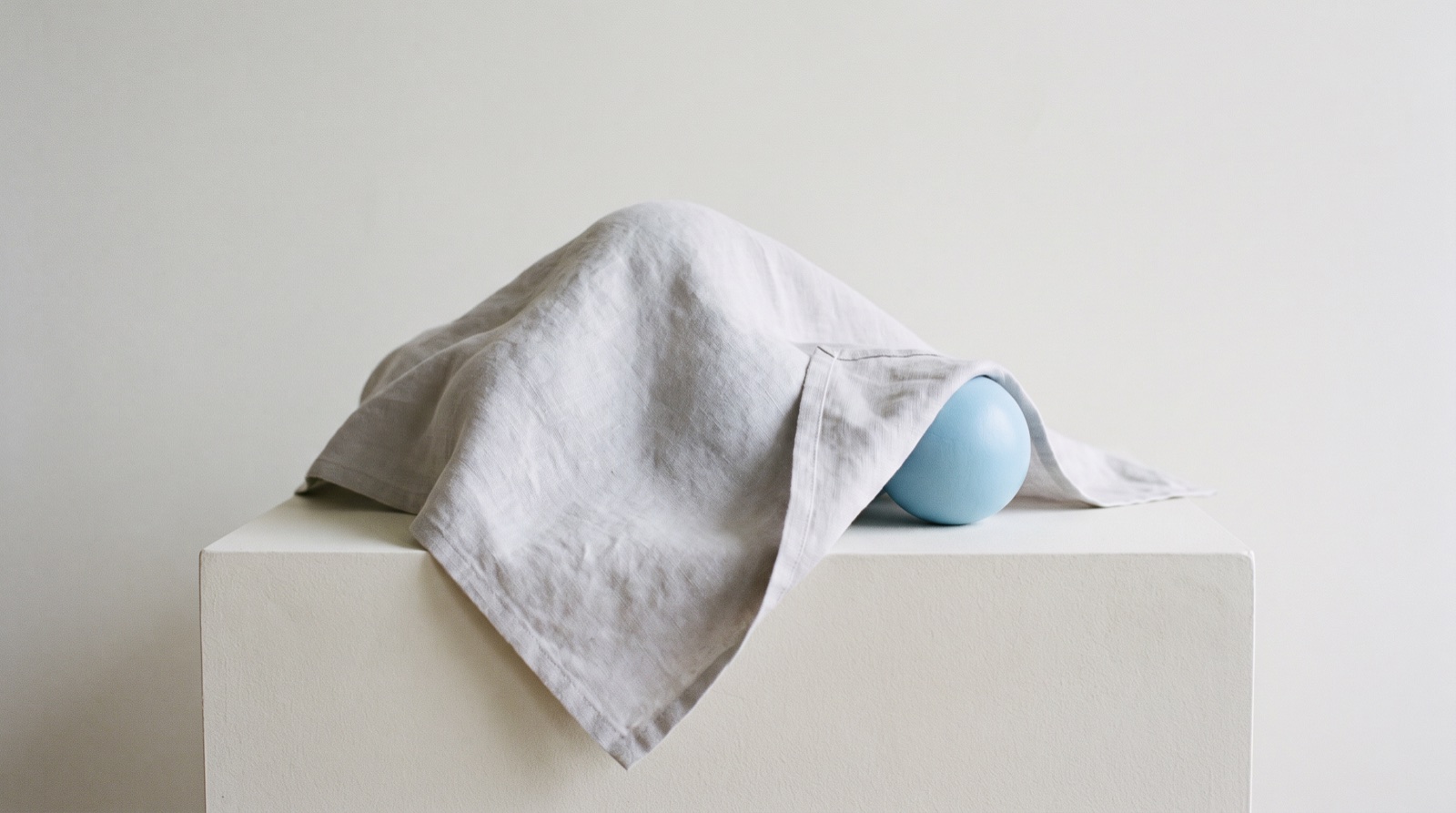
“ADHD object permanence” is the phrase people reach for when a task, an object, or a person drops out of mind the moment it drops out of sight. The name is borrowed from developmental psychology, and taken literally it does not hold up. The experience underneath it is real, extremely common, and much easier to work with once you know what is causing it.
The pattern shows up in five familiar forms.
| What it sounds like | What is happening | What helps |
|---|---|---|
| ”I forgot the leftovers existed until they went bad” | The closed door removed the only cue you had | Clear containers, front shelf, nothing stored behind a door you rarely open |
| ”The laundry sat in the washer for two days” | Time-based reminding is the weakest kind for ADHD brains | Tie the reminder to an event you will hit, not to a clock |
| ”I put it in a drawer and never saw it again” | Storage that hides things works like deleting them | Visible storage, or one open tray that everything passes through |
| ”I have not texted my friend in four months” | No contact meant no cue; the caring never stopped | A short standing list of people, looked at on a set day |
| ”It is on a list somewhere” | Five lists behave like no list | One capture place you trust, checked daily |
What object permanence means, and what ADHD does to it
Object permanence, in the technical sense, is the understanding that things continue to exist when you cannot see, hear, or touch them. Jean Piaget described it as a milestone of infancy, and it is generally reached somewhere between eight and twelve months old, which is why peekaboo stops being astonishing to a baby around then (StatPearls, NCBI Bookshelf). Once a child has it, it stays.
ADHD does not undo that milestone. Clinicians are direct about this: object permanence is not a symptom of ADHD, and no diagnostic manual lists it as one (Talkiatry). You know perfectly well that the dentist appointment, the friend, and the half-finished laundry still exist. Ask and you can name every one of them.
What the phrase describes in ADHD communities is something narrower and more specific: things that leave your field of view also leave your active attention, so they stop prompting you to do anything about them (Medical News Today). Knowing a thing exists and being reminded of it at the right moment are two separate jobs. ADHD makes the second one much harder.
Why the borrowed name stuck anyway
The term spread through ADHD spaces online because it captures the feeling from the inside better than the clinical vocabulary does. “Impaired prospective memory retrieval under low environmental cueing” is accurate. “It is like the thing stopped existing” is what it feels like at 9pm when you open the fridge.
Worth holding both. The phrase is a useful shorthand between people who share the experience, and it is not a diagnosis, a deficit you can be tested for, or a thing to tell a doctor you have. What follows is the mechanism the shorthand is pointing at.
What is going on instead
Three well-studied parts of ADHD stack up to produce the same result, and none of them involve forgetting that objects exist.
Working memory holds less than the day asks of it. Working memory is the small mental workspace that keeps a few things active while you use them. A meta-analytic review of 38 studies of adults with ADHD found moderate-magnitude deficits in both the verbal and the visual-spatial kinds, meaning the impairment persists well past childhood (Alderson et al., 2013). An intention you are holding without any outside support is sitting in that workspace, competing with everything else. Close the cupboard and one of the few things propping it up is gone.
Remembering to do something later is its own skill, and it is the more fragile one. Psychologists call it prospective memory, and it splits in two. Event-based prospective memory fires when a cue shows up, like seeing the pharmacy and remembering the prescription. Time-based prospective memory has to fire from the inside, with no cue at all, like remembering at 4pm to move the laundry. A review of studies in children with ADHD found the time-based kind was the more consistently impaired of the two (Mioni, Busatto & Stablum, 2018). That distinction is the whole game. Where a cue exists you do fine, and a closed door is precisely the removal of a cue.
Time itself is hard to feel. A 2024 systematic review and meta-analysis pooled 824 effect sizes and found a moderate-to-large time-perception deficit in ADHD, with a Hedges’ g of 0.688, and found the size of the deficit tracked with working memory (Metcalfe, McFeaters & Voyer, 2024). If the internal clock runs unevenly, “I will deal with it in an hour” is not a plan you can rely on. More on that in ADHD time blindness.
Russell Barkley, whose 1997 paper set out the standard executive-function model of ADHD, drew the practical conclusion decades ago (Barkley, 1997). When information cannot be held reliably inside the head, the answer is to put it outside of it. In his own words, “to externalize information is to make it physical outside of the individual,” and those physical cues need to sit “at the point of performance,” meaning the place and moment where the action has to happen (Barkley, ADHD, EF and SR fact sheet). He is blunt that the alternative approach, nagging, does not work.
What it looks like on an ordinary Tuesday
The pattern is easiest to recognize in domestic detail:
- Vegetables bought with real intent, found liquefied in the crisper drawer three weeks later.
- A wash cycle finished on Saturday morning, remembered on Monday night, run again.
- Mail that goes into a pile, and the pile goes onto a shelf, and the shelf becomes invisible furniture.
- A thoughtful gift bought in October and rediscovered in March.
- The spare charger you put “somewhere safe,” which is now the safest place in the house.
And the counter-move that people invent on their own: leaving everything out in the open, because putting it away is the same as losing it. That is why the counter is covered, the chair has clothes on it, and every surface is doing memory work. It is a reasonable strategy applied without limits, and it produces its own problem, which is doom piles and the exhausting visual noise of a room where nothing can be put away.
The version that involves people
The hardest form of this is not the laundry. It is realizing that a friendship went quiet for a year and you did not notice it happening.
There was no decision. Contact stopped, the cue stopped with it, and the person moved out of daily attention while your feeling about them stayed exactly where it was. The person on the other side, reasonably, may read the silence as a message (Talkspace). The gap between how much you care and how little you reached out is where the guilt lives, and it tends to be heavier than the situation deserves.
Two things worth saying plainly. Attention is not affection, and the two running out of sync says nothing about how much someone matters to you. And the fix here is the same as everywhere else in this post: not more remembering, but a cue. A recurring reminder to text three people, a note in your capture list with their names on it, a standing monthly call. Unromantic, and it works.
What helps: let the environment do the remembering
Every strategy below is the same principle from a different angle. Stop asking a small working memory to hold things, and move the holding into the world.
Make storage show what is inside it
The rule is that a closed opaque container is a container you will not think about. Clear bins, open shelving, labels, and keeping frequently forgotten items at the point where you will need them are the standard recommendations for exactly this reason (Understood). It is worth designing your kitchen and desk around what you will see rather than around what looks tidy. A front-of-fridge shelf that holds only things that expire this week will save more food than any amount of resolve.
Keep one capture place, and keep it in view
Items scattered across sticky notes, three apps, and a whiteboard are functionally hidden, because none of the locations is the one you will check. CHADD’s organizing guidance for adults leans hard on external, explicit systems rather than intention, and on breaking the work into small scheduled steps instead of assuming follow-through happens on its own (CHADD). One place, reviewed at a set time, beats five places reviewed when you happen to remember. That single place is what a brain dump produces.
Attach the task to something you will bump into
An if-then plan, which researchers call an implementation intention, links an action to a specific situational trigger: “if I finish dinner, then I move the laundry.” A meta-analysis of 94 independent tests found a medium-to-large effect on goal attainment, d = .65 (Gollwitzer & Sheeran, 2006). The mechanism is the point here, because the plan works by making the cue easy to notice, which converts a time-based reminder into an event-based one. There is direct ADHD evidence too: if-then plans improved response inhibition in children with ADHD in studies by Gawrilow and Gollwitzer (2008).
Give hidden things a review date
Some things have to go in a box. When they do, put a date on the outside and check it then. CHADD suggests writing a date three to six months out on anything undecided, and reviewing on that day; if you did not need it by then, letting it go is safe (CHADD). A deferral with a date attached behaves very differently from a deferral without one.
Where Whit fits
The method here does not need an app. A whiteboard by the door, clear bins, and one notebook you keep open will do the job, and if that is working for you there is no reason to change it.
The part that tends to fail is the capture place. It has to be somewhere you can dump a thought in three seconds, at the moment the thought exists, or it will not catch anything. And it has to be somewhere you will look again, or you have built one more drawer. Whit is a calm brain dump and daily planner for iPhone, iPad, and Mac, built around exactly that pair of problems. You empty whatever is on your mind, by text or voice, into a Calm Inbox, with no red overdue badges pressuring you to file it immediately.
Then the sorting happens later, and separately. From the inbox you move things onto the Visual Day, a gentle timeline from sunrise to night, which is what turns “sometime” into a place on an actual day, and puts your intentions somewhere with a shape instead of somewhere in your head. Because it syncs across your iPhone, iPad, and Mac, the list is in view wherever you happen to be standing when the thought arrives. That sync runs only through your own iCloud, with no accounts, no logins, and no analytics in the app.
Whit will not remember the leftovers for you, and it is not a treatment for anything. It is a place to put things that is easier to reach than your memory.
What this does and does not claim
Three limits worth stating, because this topic collects confident claims.
“ADHD object permanence” is community shorthand, not a clinical term, and object permanence in the Piagetian sense is intact in ADHD (Talkiatry). Anyone selling you a treatment for it is selling you something for a condition that does not exist under that name.
The research on prospective memory in ADHD is real but thinner than the working-memory literature, and the review cited above covers six studies in children rather than a large adult meta-analysis (Mioni, Busatto & Stablum, 2018). Treat the time-based versus event-based distinction as a well-supported working model rather than a settled fact.
All of these numbers are group averages, and group averages never describe an individual. And none of this is medical advice. If forgetting is costing you your job, your health, or your relationships, that is worth raising with a doctor, because ADHD is treatable and a planner is not treatment.
Common questions about ADHD and object permanence
Is object permanence a real ADHD symptom?
No. Object permanence is an infant developmental milestone reached between roughly eight and twelve months, and it is not affected by ADHD. Clinicians state plainly that it is not an ADHD symptom and it appears in no diagnostic criteria. The phrase is community shorthand for a different problem, which is attention and memory needing external cues (Talkiatry).
What do people mean by “ADHD object permanence”?
They mean that things which leave their sight also leave their active attention, so nothing prompts them to act. Food in a closed fridge, clothes in a closed washer, a friend not recently seen. The knowledge that these exist is intact; the reminder that arrives at the useful moment is what goes missing (Medical News Today).
Why do I forget to contact people I care about?
Because contact with a person is usually cued by seeing or hearing from them, and when the cue stops, so does the prompting. This says nothing about how much you value the friendship. A recurring reminder or a short standing list of names does the job that spontaneous recall is not doing reliably.
Does this explain why I leave everything out in the open?
Largely, yes. Leaving items visible is a self-invented workaround: keeping the object in sight keeps it in mind, so putting it away feels like losing it. The strategy works, but without limits it fills every surface. Visible storage, like clear bins and open shelves, gives you the same cueing without the clutter (Understood).
Related reading
- The clutter this creates, and how to clear it: doom piles and the ADHD brain.
- Why “later” is such an unreliable plan: ADHD time blindness.
- Building systems that do not lean on memory: ADHD organization tips.
- The capture step underneath all of it: what a brain dump is.
- The weight of tracking everything for everyone: the mental load.
Where to start
Pick the one thing that has gone missing most often this month. The laundry, the mail, the friend, the bills. Then change one piece of the environment so that thing has a cue: move it to a shelf you pass, put the reminder next to the action instead of in your head, or write it in the one place you check every day.
You are not going to out-remember this, and you do not have to. You just have to leave yourself better evidence.
If you want a calm place to put things down before they disappear, Whit is a one-time purchase for iPhone, iPad, and Mac. There is a 7-day free trial, then $99 once with no subscription. See the details.