ADHD Motivation: What Helps When You Cannot Make Yourself Start
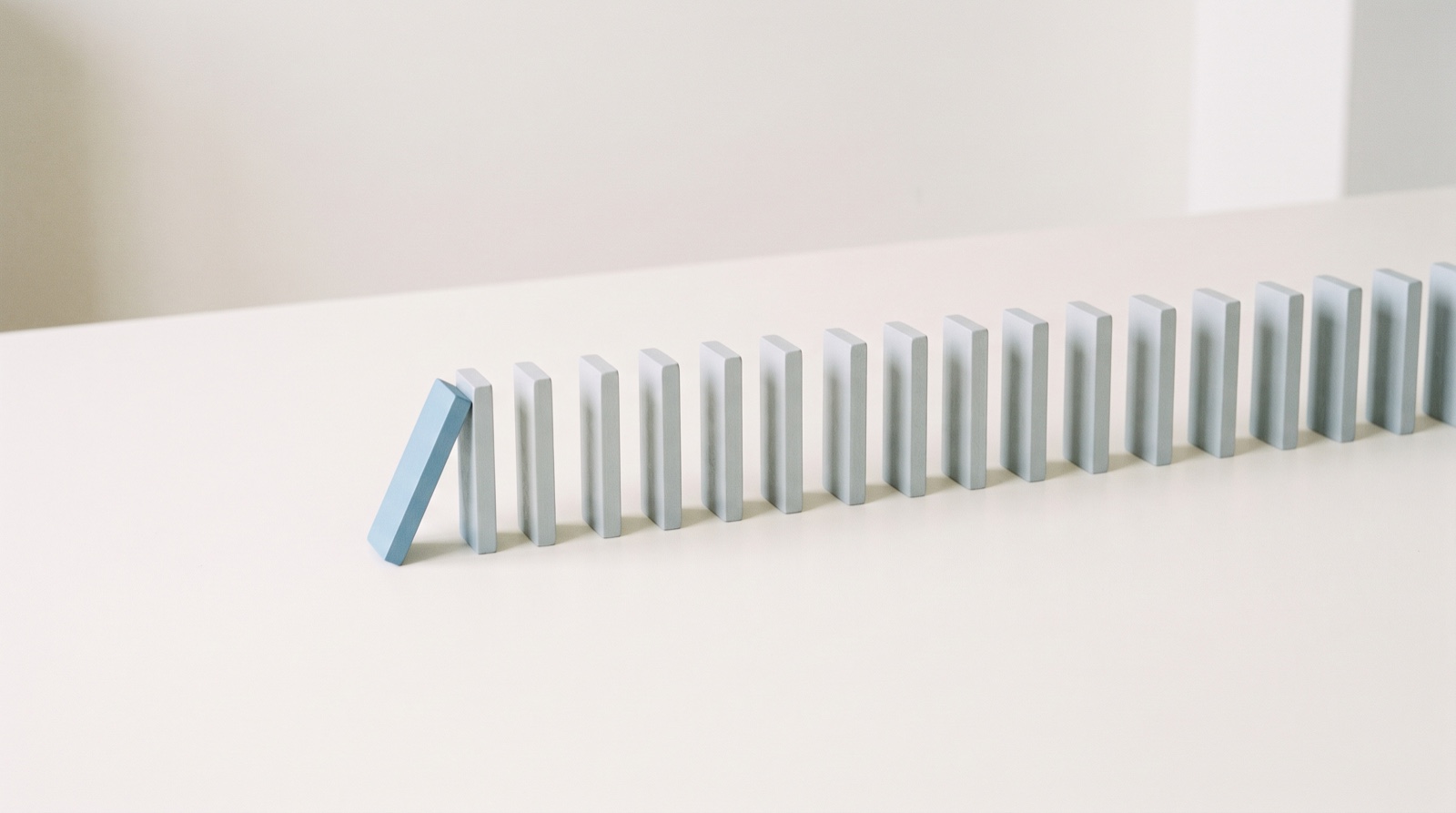
ADHD motivation does not arrive on schedule, and waiting for it is the trap. You can know exactly what the task is, care about the outcome, understand what happens if you skip it, and still sit there unable to begin. That gap between knowing and doing is the part worth understanding, because it responds to different tools than trying harder.
Here is the short version before the detail.
| What you experience | What is happening underneath | What helps |
|---|---|---|
| You care about the task and still cannot start | Regulating motivation is part of executive function | Shrink the first step until it needs no motivation |
| Only a deadline makes it possible | Urgency supplies the immediacy the task was missing | Create earlier, smaller, real deadlines |
| Dull tasks feel physically heavy | Delayed payoffs carry less weight in ADHD | Attach something immediate to the boring task |
| You can work all night on the interesting thing | Interest recruits effort that importance cannot | Borrow interest where you can, scaffold where you cannot |
| Rest does not restore the drive | This may be burnout rather than low motivation | Treat recovery as its own task |
What running on empty feels like
It rarely feels like not caring. It feels like standing on the wrong side of a door you cannot open, watching the hours go, while the task sits there costing you more each time you look at it.
The specifics tend to be familiar. You reorganize the whole kitchen instead of sending one email. You open the document, read the first line four times, and close it. You promise yourself you will start after one more scroll. You feel the shame arrive on schedule even though the effort you are spending is real, because from the outside it looks like you did nothing.
CHADD states the correction plainly: ADHD is a neurobiological condition and is “not related to laziness or a lack of intelligence” (CHADD). Holding that line matters, because the story you tell yourself about why you stalled determines which tool you reach for next.
Why ADHD motivation works differently
Motivation in ADHD is better described as a regulation problem than a supply problem. Four strands of research point the same way.
Self-motivation sits inside executive function. Russell Barkley’s model of ADHD places “self-regulation of affect-motivation-arousal” alongside working memory, internalized speech, and reconstitution as the executive functions built on behavioral inhibition, and describes ADHD as involving deficits in inhibition and in the regulation of motivation (Barkley, 1997). Generating drive for a task that offers nothing right now is executive work, and it is drawn from the same account that is already overdrawn.
There is a motivational route into ADHD, separate from the attention one. Sonuga-Barke’s dual pathway model proposes two developmental routes: one through executive dysfunction, and one through delay aversion, a motivational style oriented toward escaping or avoiding waiting (Sonuga-Barke, 2003). Under that account, the pull away from a task with a distant payoff is a feature of the wiring rather than evidence about your character.
Delayed rewards genuinely count for less. A meta-analysis of case-control studies found that people with ADHD discount delayed monetary rewards more steeply than controls, with a pooled effect of d = 0.43 across 21 investigations and 3,913 participants (Jackson and MacKillop, 2016). A medium effect works as a persistent tilt in the scales rather than a wall, which explains why a task paying off next quarter loses to one paying off in the next ninety seconds.
The reward circuitry differs measurably. PET imaging in adults with ADHD found lower binding of dopamine transporters and D2/D3 receptors in the nucleus accumbens and midbrain, and the size of that difference tracked with inattention symptoms (Volkow et al., 2009). Read that carefully, because the popular summary overshoots. The study measured binding of specific markers in specific structures. It did not measure how much dopamine you have, and “ADHD means low dopamine” is a compression of the finding rather than the finding.
Taken together these describe a system that responds well to immediate, concrete, interesting things and poorly to distant, abstract, dull ones. Every strategy below works by moving a task from the second category toward the first.
What helps right now
These are for the hour you are in. None of them requires motivation to exist first.
Write down everything you are carrying. Unfinished goals push themselves into your thoughts and measurably degrade performance on whatever else you are doing, and forming a specific plan for them removes that interference (Masicampo and Baumeister, 2011). Offloading what you are holding onto an external store is one of the better supported moves in cognitive science generally (Risko and Gilbert, 2016). Emptying your head is a brain dump, and it costs nothing to attempt while stalled.
Make an if-then plan instead of a to-do item. “I will do the report tomorrow” is an intention. “When I sit down with coffee at 9, I will open the report and write the first heading” is an implementation intention, and the difference is large. A meta-analysis of 94 independent studies with more than 8,000 participants found a medium-to-large effect on goal attainment, d = 0.65 (Gollwitzer and Sheeran, 2006). Naming the cue and the action removes the decision from the moment you are least able to make it.
Shrink the step until it is beneath argument. Open the file. Write one sentence. Put one dish away. A step small enough to be certain does not need drive behind it, and finishing something is the cheapest way to make the next step easier. If starting itself is the wall you keep hitting, task initiation covers it in more depth.
Give the task something immediate. Distant payoffs lose, so borrow a near one: a timer running, a person in the room, a specific hour with your name on it, the thing you get to do afterward. CHADD’s own guidance for tedious tasks is to break them into chunks and use incentives to carry the motivation the task itself does not supply (CHADD).
Let action come before the feeling. Behavioral activation, which treats doing as the way into wanting rather than the reward for it, is well evidenced in depression, with a standardized mean difference of 0.74 against controls across 25 studies (Ekers et al., 2014). It has not been trialled as an ADHD treatment, so borrow the principle and hold the claim loosely. The principle is that waiting to feel ready is the one strategy with no mechanism behind it.
What helps over time
Build the day around when you have anything to give. Most people have two or three hours when work is possible rather than heroic. Put the task you keep avoiding inside one of them and stop scheduling it for 4pm on a Friday. Making time concrete rather than abstract does a lot of quiet work here, which is the same idea behind time blindness.
Decide the night before. Choosing what to do is a separate cost from doing it, and it lands at the worst moment. Pick tomorrow’s one or two real items today, while the pressure is off. How to prioritize tasks covers a calm way to choose, and eat the frog covers putting the heavy one where your energy is.
Use interest deliberately. The practitioner framing many adults recognize is William Dodson’s, which describes ADHD engagement as driven by interest, challenge, novelty, and urgency rather than importance (ADDitude). It is a clinician’s explanatory model rather than a measured construct, so treat it as a useful description rather than a mechanism. As a practical matter, pairing a dull task with music, a location change, a stopwatch, or company is a reasonable use of it.
Consider CBT if you want the best-tested option. Cognitive behavioral therapy for adult ADHD teaches planning, organizing, time management, and handling procrastination directly. A meta-analysis of 32 studies found medium-to-large improvements in self-reported symptoms from before to after treatment, and smaller effects against active control conditions (Knouse et al., 2017).
Protect sleep before you optimize anything else. Nothing in this article survives a week of four-hour nights. Drive is downstream of rest, and if your evenings disappear to racing thoughts, that is the repair worth making first.
When low motivation is something else
Motivation that has been gone for weeks, across everything including the things you used to like, is worth taking seriously as its own signal rather than filing under ADHD.
ADHD burnout presents this way: the capacity is spent, and rest does not return it on the usual schedule. Depression presents this way too, and it is common alongside ADHD. So do thyroid problems, anemia, chronic pain, grief, and sustained stress. CHADD notes that where executive function difficulties sit alongside anxiety or depression, treating the mental health condition often improves executive function as well (CHADD).
If that describes the last month, the useful next step is a clinician, not a better system. NIMH’s overview of adult ADHD is a reasonable starting point for what assessment and treatment involve (NIMH). A planner is a tool. It does not treat a medical condition, and no app in the world is a substitute for care you need.
How Whit fits
Every strategy above depends on two things being cheap: getting what is in your head onto something outside it, and turning the result into a specific step at a specific time. That is the loop Whit runs. Whit is a calm brain dump and daily planner for iPhone, iPad, and Mac.
Capture has to cost nothing on a day with nothing to spare. In Whit you empty everything by text or voice and it lands in a Calm Inbox. Nothing demands to be sorted at the moment you write it down, which matters because sorting is executive work, and executive work is the thing you are short of when motivation is missing.
Then a few of those items become a Visual Day, a gentle timeline from sunrise to night. That is where an intention turns into an if-then plan, because the item now has an hour attached rather than a vague someday. There are no red overdue badges waiting to greet you, and Streaks are opt-in, because a tool that punishes you for a bad week makes the next week harder. See everything Whit does, or read how a brain dump becomes a daily plan.
What you write stays yours. Whit syncs only through your own iCloud, with no accounts, no logins, and no analytics in the app.
What the research does and does not say
This topic attracts confident claims that do not survive a check, so here are the honest limits of what is above.
“ADHD is a dopamine deficiency” overstates the imaging work. Volkow and colleagues found lower binding of particular dopamine markers in particular brain structures, correlated with inattention (Volkow et al., 2009). That is a specific finding about receptor and transporter availability, and it does not license the claim that ADHD brains run on a low dopamine tank that the right routine can refill.
The interest-based nervous system is a clinical description rather than a measured construct. It captures the lived experience well and lines up with the research on delay and reward, and you will not find it operationalized in the primary literature.
Implementation intentions are the strongest tool here, and the direct ADHD evidence is thinner than the general evidence. The d = 0.65 figure comes from 94 studies in the general population (Gollwitzer and Sheeran, 2006). ADHD-specific work exists but is small and mostly in children, where if-then plans improved response inhibition in children with ADHD (Gawrilow and Gollwitzer, 2008).
Behavioral activation, cognitive offloading, and body doubling are all consistent with the research on self-regulation and reward, and none has been tested as a clinical intervention for adult ADHD motivation. They are sensible tools with a plausible mechanism. Whit is a calm productivity app, not a medical or mental health treatment.
Common questions about ADHD motivation
Why do I have no motivation with ADHD even for things I want to do?
Because wanting an outcome and being able to start are handled separately. Regulating motivation for a task with no immediate payoff is executive work (Barkley, 1997), and delayed rewards carry measurably less weight in ADHD (Jackson and MacKillop, 2016). Caring about something distant does not generate the pull needed to begin it now.
How do I get motivated with ADHD when nothing works?
Stop trying to produce the feeling and change the task instead. Make the first step small enough that finishing it is certain, name a specific cue and time for it, and attach something immediate such as a timer, a person, or a deadline that arrives this week. Implementation intentions have the strongest evidence of anything in that list.
Is ADHD a motivation problem or a laziness problem?
Neither describes it well, and laziness is the wrong frame entirely. CHADD is explicit that ADHD is a neurobiological condition unrelated to laziness or intelligence (CHADD). What is measurably different is how the reward system weighs delay, which is why effort arrives easily for urgent things and not for important ones.
Why can I only work under a deadline?
A deadline converts a distant payoff into an immediate one, which is the exact adjustment the system responds to. That is consistent with delay aversion as a motivational route in ADHD (Sonuga-Barke, 2003). The workable version is to create earlier and smaller deadlines on purpose rather than waiting for a real one to arrive in crisis form.
Does medication fix ADHD motivation?
That is a clinical question and not one to settle from an article. NIMH describes adult treatment as usually combining approaches, with people often trying several before finding a fit (NIMH). Behavioral strategies and clinical treatment work alongside each other rather than competing, and CBT has the strongest non-medication evidence in adults.
Related reading
- When you cannot begin at all, read task initiation.
- If the block feels like being frozen rather than unmotivated, see task paralysis.
- When rest stops restoring anything, see ADHD burnout.
- For attention rather than drive, see how to focus with ADHD.
- For the capture habit itself, see the ADHD brain dump method.
Where to start
Do not try to fix your relationship with motivation this week. Pick one task you have been avoiding, write down everything else that is cluttering your head so it stops interrupting, then write a single line naming when and where you will take the first small step. Make that step something you could finish in two minutes. You are not trying to become someone who feels like working. You are trying to need the feeling less.
If you want a calm place to put it all down, Whit is a one-time purchase for iPhone, iPad, and Mac. There is a 7-day free trial, then $99 once with no subscription. See the details.