How to Make a To-Do List: One Master List and a Short Today List
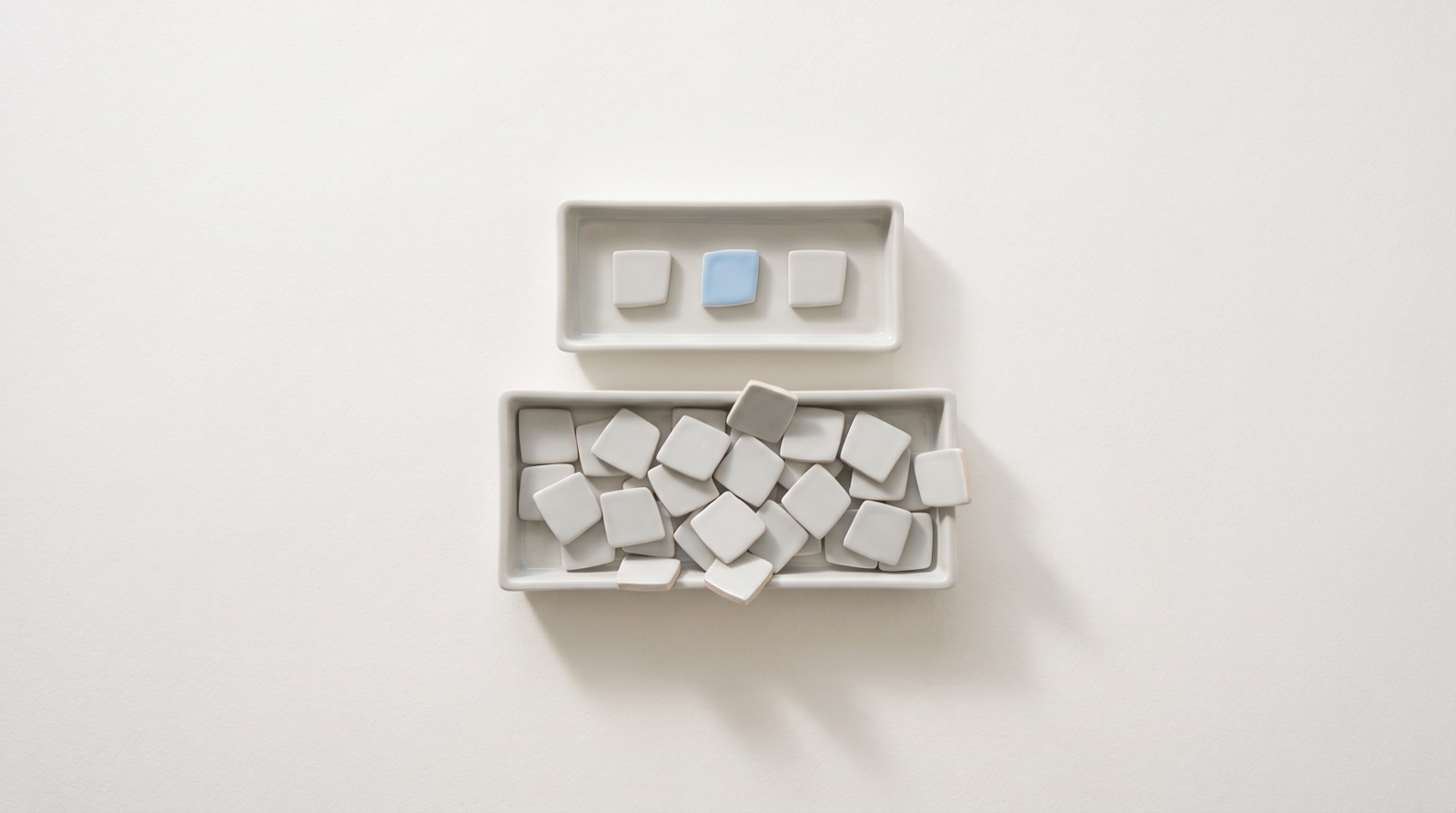
To make a to-do list that survives a real week, keep two lists instead of one. A master list holds everything you have agreed to do, in one place, so none of it has to live in your head. A short list holds what you are doing today, pulled from the master list, small enough that finishing it is possible.
The rest is wording. An item you could start without thinking gets done. An item that is really a project in disguise sits untouched for a month, and after a few of those you stop trusting the list at all.
| The part | What it does |
|---|---|
| The master list | One place for everything you have said yes to |
| Today’s list | Three to five items pulled from the master list |
| The wording | Each item names a physical action you could begin now |
| The split | Long-term goals stay off today’s list |
| The review | Anything that rolls over three days gets broken down or dropped |
| The floor | One page and a pen |
How to make a to-do list, step by step
Nothing below needs an app. A single sheet of paper and five quiet minutes will get the whole thing standing.
1. Empty your head onto one page
Before you organize anything, get every open loop out and onto the page, unsorted and unranked. Errands, work, the email you have been avoiding, the thing you keep meaning to ask someone. That is a brain dump, and it comes before the list, not after it.
Skipping this step is the most common reason a list feels wrong from day one. Without it you write down whatever happens to be loudest that morning, which is rarely what matters most.
2. Keep one master list, and keep it separate from today
Everything from the dump goes onto a master list: one place, one page or one screen, for every task and project you have taken on. CHADD makes the separation explicit, noting that lists can cover a day or a year, that you probably need both, and that it is best to keep them separate (CHADD).
The reason is practical. Writing “learn Spanish” on today’s list every morning does not move it forward, and after a week of copying it over you either stop seeing it or start feeling bad about it. Long-horizon items belong on the master list, where they can wait without showing up on tomorrow’s page.
3. Write each item as a physical action
Read each item and ask whether you would know what to do with your hands. “Exercise” is a category. “Do twenty-five push-ups” is something you can start. CHADD’s guidance is the same: focus on specific actions rather than vague ideas, because a vague entry is one your eye slides past (CHADD).
Two small habits do most of the work here. Start each item with a verb, and include the first concrete detail you would otherwise have to go looking for: the phone number, the file name, the room.
4. Break anything bigger than a step into steps
“Clean the kitchen” is broad enough to ignore. Empty the dishwasher, wipe the counters, throw out the expired food, sweep. Four entries you can cross off beats one you avoid, which is CHADD’s advice almost word for word.
The test for whether an item needs breaking down is not its size on the page. It is whether you can name the first physical action without pausing. If you cannot, the item is a project and it needs one line of thought before it goes anywhere near today.
5. Choose today’s short list
Pull three to five items from the master list onto today’s list. Nothing else goes on it. CHADD suggests marking the three most important items with numbers when a list runs long, and mentions the 1-3-5 approach of one big item, three medium ones and five small ones for people who want a shape rather than a count.
Three is not a magic number, and no study establishes a correct one. A cap works because it forces a choice while you are still calm, and any number small enough to hurt a little will do that. If choosing is the part you find hard, how to prioritize tasks covers it properly.
6. Look at what keeps rolling over
Once a day, or every couple of days, move new items from the dump onto the master list and pull tomorrow’s short list from it. While you are there, notice anything that has rolled over three or four days running.
A repeat offender is information, not a character flaw. CHADD’s questions are the right ones: is the task too big, or is it something you are dreading? Break it down, attach a small reward, hand it off, or cross it out because it stopped mattering three weeks ago.
Why the two-list split works
Four things are happening in a plain paper list, and most of them have real research behind them.
Your head is a poor place to store a list. The part of your mind that holds active thoughts keeps only a handful of items in focus at once, roughly four chunks under careful test conditions (Cowan, 2001). A list of twenty things has never fit, and trying to hold it anyway is what the low background hum of overwhelm is made of.
Writing something down frees capacity rather than just recording it. Offloading memory onto the world is a well-documented strategy with measurable benefits, not a crutch (Risko and Gilbert, 2016). In one set of experiments, saving a first file made people remember the contents of a second one better, so the act of storing something externally improved performance on what came next (Storm and Stone, 2015).
An unfinished task stops nagging once it has a plan. When people were left holding an unmet goal, it intruded on later tasks that needed focus, and the intrusion faded once they made a concrete plan for it, before doing any of the work (Masicampo and Baumeister, 2011). A master list you trust is that plan at its cheapest: the item has a place, so it stops asking to be remembered.
Specific wording is what turns an intention into an action. Plans that fix what you will do and when are called implementation intentions, and across roughly 94 independent tests they produced a medium-to-large effect on goal attainment, with an average effect size of d = .65 (Gollwitzer and Sheeran, 2006). “Call the dentist” is weaker than “call the dentist at 9am, number in my contacts,” and the difference is the whole reason step three exists.
One honest caveat. None of this tests the two-list method itself. There is no controlled trial of master lists, and CHADD’s recommendations come from clinical and practical experience rather than randomized studies. What the research supports are the mechanisms underneath: your working memory is small, external storage helps, plans quiet intrusive thoughts, and specific plans beat vague ones. Treat the structure as a sensible way to use those findings, not as a proven protocol.
The not-to-do list
The list nobody writes is the one for things you have decided to stop. Jim Collins puts it plainly on his own site: “You need to have a ‘stop doing’ list to go with your ‘to do’ list,” and describes keeping his right next to it (Jim Collins).
A not-to-do list is short and specific, and it works best when each line names a real thing you keep doing:
- The recurring meeting you attend out of habit.
- The report nobody has read in a year.
- Checking email before you have started the first task.
- Saying yes on the phone before you have looked at the week.
- The project you inherited and never chose.
A master list only stays honest if things are allowed to leave it. Every open item you no longer intend to do makes the rest of the list slightly less believable, and a list you do not believe is one you stop opening.
When there is too much to do
Sometimes the list is not badly built. There is simply too much to do, and no amount of wording fixes a workload.
Three things help, in this order. First, put all of it in one place anyway, because a full page you can see is easier to reason about than an unknown amount you are carrying. The mental load of an uncounted list is heavier than the counted version, even when the counted version is long.
Second, separate what you have committed to from what you have merely absorbed. Most overloaded lists contain a surprising number of things nobody asked you for, and that half belongs on the not-to-do list.
Third, choose today’s three anyway. A short list on an overloaded week is the only version of the day that was ever going to be true, and the master list is still sitting there holding the rest of it. If choosing feels impossible rather than difficult, that is closer to task paralysis than to a planning problem, and it responds to smaller first steps rather than better lists.
Common ways a to-do list falls apart
One list is doing two jobs. Daily actions and long-term projects on the same page is the failure mode CHADD’s separation rule exists to prevent. The day looks impossible and the goals never move.
The list has no sense of duration. A count of items says nothing about hours. We reliably underestimate how long our own work will take, a bias documented since Buehler, Griffin and Ross found completion-time predictions were consistently too optimistic even for tasks people had done before (Buehler et al., 1994). Five items can be a light morning or an impossible week. If you want durations attached, that is how to plan your day.
It lives in three places. A note on the phone, a whiteboard, and the back of an envelope makes three lists, and you end up trusting none of them. One master list, in one place you will open every day, is worth more than a better format spread across four surfaces.
Nothing is ever removed. A list that only grows becomes a monument. Crossing off, cutting, and renegotiating are part of using a list, not signs of failing at one.
The completion statistics you have read are not real. You will see confident claims that some large percentage of to-do items are never finished, usually traced to a company blog post rather than a study. No peer-reviewed figure establishes a general completion rate for to-do lists, so treat any specific number as marketing.
Making a to-do list when you have ADHD
Every step above matters more here, and two of them matter most.
Prioritizing and sequencing are exactly the functions under strain. Russell Barkley’s account of adult ADHD describes it as a disorder of executive function, the set of abilities that organize behavior across time toward future goals, with knock-on costs to working memory, planning, and problem-solving (Barkley, 2010). Asking a brain in that position to hold and rank twenty items is asking it to do the one thing it is worst at. Moving the list out of your head removes that demand entirely, which is why external scaffolding shows up in nearly every practical ADHD guide.
The other one is visibility. CHADD is blunt about it: the key to a to-do list is keeping it somewhere you will see and use it, because a list in a drawer is one you neither add to nor consult (CHADD). Out of sight is the whole problem, which is why object permanence and ADHD keeps coming up in the same breath as list-keeping.
Three adaptations worth making:
- Keep today’s list to three items. CHADD’s suggestion to mark the top three is a better starting cap than any longer count when overwhelm is the usual failure mode.
- Never leave a vague item on today’s list. Rewrite it until the first action takes ten minutes and needs no further decisions.
- Let the master list be messy. It is a holding place, not a filing system. Sorting it beautifully is a way of avoiding it.
If most days feel like this, and it comes with real anxiety or low mood, that is worth raising with a doctor or therapist. A list is not a treatment. For the wider picture, see executive dysfunction and ADHD.
How Whit fits
The two-list structure is a paper method, and it works on paper. What paper does not do is make the daily hand-off easy, and that hand-off is where most people lose the habit by Thursday.
Whit is a calm brain dump and daily planner for iPhone, iPad, and Mac, built around that loop. You empty your head by text or voice and it lands in a Calm Inbox, which is the master list without the wall of red overdue badges. Then you move a few items onto the Visual Day, a gentle timeline from sunrise to night, which adds the thing a written list never has: a rough sense of whether today’s three fit in the hours you have. Anything you do not get to stays in the Inbox, waiting rather than nagging. See everything Whit does, or read how a brain dump becomes a daily plan.
What you write stays yours. Whit syncs only through your own iCloud, with no accounts, no logins, and no analytics in the app.
Common questions about making a to-do list
What is a master to-do list?
A master to-do list is the single place you keep every task and project you have taken on, with no attempt to schedule it. It exists so nothing has to live in your head or in a second app. Your daily list is drawn from it each day, which keeps today’s page short while the full picture stays somewhere you can see it.
How many items should be on a daily to-do list?
Three to five is a good default for most people, and no research establishes a correct number. CHADD suggests marking the top three when a list runs long, and mentions a 1-3-5 shape of one big, three medium and five small items. The cap matters more than its exact value, because it forces you to choose before the day starts.
What is a not-to-do list?
A not-to-do list names the specific things you have decided to stop doing, kept beside your to-do list. Jim Collins describes keeping the two side by side, and it is the part of list-keeping most people skip. Its real job is to let items leave your master list, so what remains is something you still believe.
Should I make my to-do list at night or in the morning?
Either works, and CHADD says to pick whichever suits you. Writing it the night before has one extra benefit: it gets tomorrow out of your head before you try to sleep. If you tend to lie awake running through the day ahead, see racing thoughts at night.
Why do I never finish my to-do list?
Usually one of three reasons. The list mixes today’s actions with long-term projects, so it can never be finished. The items are projects rather than actions, so they cannot be started. Or the list has a count but no sense of duration, and five items happened to be eleven hours of work.
Related reading
- The capture step in full: what a brain dump is and how to do one.
- Turning the list into an actual day: from brain dump to daily plan.
- If choosing today’s three is the hard part: how to prioritize tasks.
- The strict six-item version of the daily list: the Ivy Lee method.
- If you want the list on your Mac: the best to-do list apps for Mac.
Where to start
Take one page tonight and write down everything you are carrying, in any order. Circle three things for tomorrow, rewrite each one until it names an action you could begin without deciding anything, and leave the rest where it is. That is a working list, built in about ten minutes, and it will hold up better than any system you spend the weekend designing.
If you want a calm place to keep the master list and pull tomorrow’s three from it, Whit is a one-time purchase for iPhone, iPad, and Mac. There is a 7-day free trial, then $99 once with no subscription. See the details.